The first word spoken

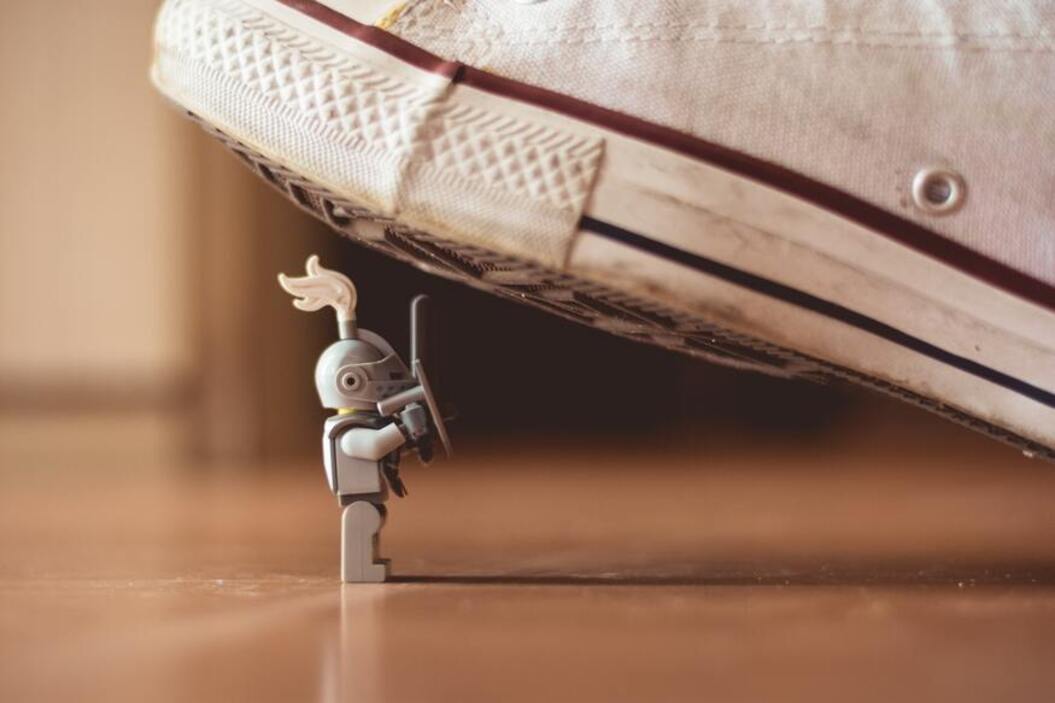
The first word a kid, normally, says is “no”. And it comes from the learning of what can and can not be done, what is ok and what it’s not.

But once we become adults, many keep the “no” as their first answer. Could we try this? No. Would you like to …? No. Is it because we keep the sense that it may incur risks? Or just as simple as they do not want to try something different?

Think, How many “no”s do you say a day?

When we want to achieve behavioral changes, we need to reprogram deep learnings. And how easy is to change something we learned at a so early stage?

Culture and breakfast

The Culture Eats Strategy for Breakfast”. Peter Drucker.

Corporate culture is defined as: “the beliefs and behaviors that determine how a company’s employees and management interact and handle outside business transactions”.

So, in the end, everything comes to people, teams and individuals. Each with its own roadmap, goals, but with a common sharing of beliefs and behaviors. But, together they are who run the business and usual, who face challenges and who will have to execute any strategy that can be designed.

As employee you need to understand your company’s culture. If you are new, in order to fit. If you are already part of the crew, it will help you to understand the way to reach your goals, why you have the feeling there is something not right or make you realized that it is not your place, you don’t fit.

As a company you can have designed the best strategy or requested for the most disruptive solutions, that if the teams have not changed, implementation will be pretty hard to achieve and proposals will not be too original. So, the company has to be aware of what kind of culture is in place.

You want to do different as a company? You need to change the way your staff behaves, or change the staff who behaves in a specific way. If this does not happen majority imposes their own way: Change proposals are always the same with different names, part of the staff is in discomfort.

Changing corporate culture it is not easy, it takes time, willingness, effort and commitment from the management team as they who will lead the transformation.

Thanks for the nice chats with awesome people that reminds me that some things never or change or the only thing that change is the name or label.

Concentration & performance

Some of us have spent the last months working from home. Suddenly, there was a change of scenario, far from the office, colleagues, coffee breaks and interruptions that led us to increase our performance. Quiet times at home allowed us to concentrate much more on what we were doing. But after a while, performance, or at least the same level of concentration could not be kept at the same level.

Some of the experiences shared by those who have been working from home are to have seen reduced their ability to remember what they read on a document, worse notes taken, less focus capacity, the solitude of mind overload (no colleague with whom to have a coffee with to just distract our minds), …

Concentration and making the best of our time comes easily when we are able to establish different spheres in our lives. When everything has to be in the same place, there is no where else to go or no options when it comes to communication, it is pretty difficult to focus, to isolate ourselves from the outside noise.

A change of setting is always a good thing, it forces and, at the same time, allows us to give again our best.

We do not have a problem

When you continuously challenge yourself, your environment, how things are done, how does the world work, .. You probably see fixable stuff everywhere.

Organizations are made by people, their knowledge, skills and attitude. The oriented-to-change or to improvement organizations&teams are always looking around, searching for things to be fixed, anything that can be improved by doing differently. Processed that are obsolete and needs to be adapted to a new reality or even better, to be created as there is nothing that can cover the gap. They act proactively. They always see an opportunity, a puzzle / problem that can be solved. The usual answer to How are thing going will be: we could do better.

The oriented-to-resolve organizations&teams happen to be on the other side of the room. They look only to fix what’s broken, only taking action when a PROBLEM is on the table. And when it does, when the problem is visible, it’s usually because it has become important, big, visible. It’s the outcome of adding many issues to which we didn’t pay much attention to, they were too small to be considered. The usual answer to How are things going? Will be: we don’t have any problem.

Well, continuous improvement permits us to avoid big problems or difficulties and be ready for the next challenge. And this is mainly a matter of attitude. The tools for changing will come after.

Because, if we don’t have a problem…. we have a problem.

Network Talks: Collaboration, how?

Easy to say, not so easy to do. Open space, team building, training, … All of this worths nothing, as they are simply tools, if there is not in place the basic, the HOW. And that’s Trust.

What you need:

Trust is the only feasible base to build a collaborative environment as it makes every interaction go farther than the only desire to obtain an occasional benefit. It brings the magic of being able to get quick wins but also, think about the long term and each participants best contribution.

How to start?

You want to collaborate? you need some kind of bond with the others. You will have to build a relationship of trust with those that will help the team to grow. It will be then when egos will not exist, it will be possible to listen to and agree with different thinkings, when you will be able to accept that the benefit of the team can be greater than your individual.

Keeping the motion:

Obviously, it is not possible to have all the members with the same level of implication. There have been identified three different groups. The first is that 1% of the team members called the core. They share, push, coordinate, always with a yes for a new adventure or with a special look at things. The second, 9% of team members called, actives. They participate when they are interested in the topic, work hard, share and learn. But, the other 90% is passive. They don’t push, they do not actively participate. They observe and listen.

Life cycle:

The collaborative network is capable of self-regulation. Meaning, if a node of the network is not adding, stops being useful for the final purpose, it blocks its progress, the same network as the base is no longer present, smoothly makes it disappear. And keeps the work with those that want and can.


Once you start, it can only get bigger.

«Gazing out the window» effect

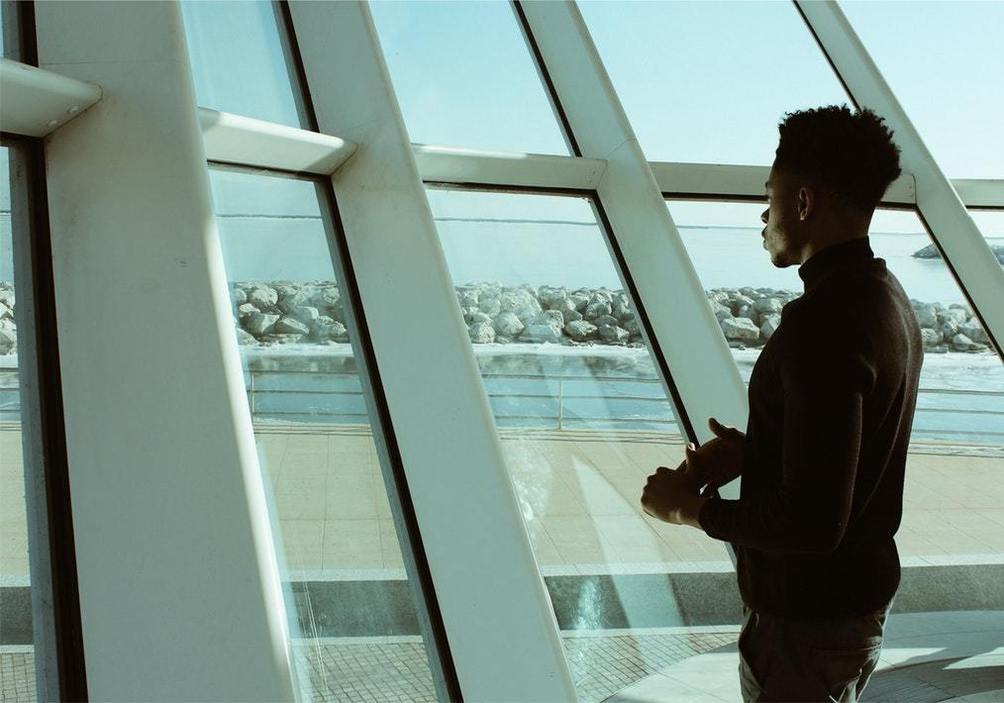
There is a funny thing about zoom, skype.. conferences. We usually forget that the same way we are seeing what others are doing, the rest can see what we are doing. It is like we were looking through a window, seeing what is happening but not being watched by anyone one can see what we are doing.  Something similar happens when we are in our cars, but that is another story.

We forget about any protocol, a protocol we would problably keep if we were attending a Video Conference on a big screen instead of staying in front of our laptop screen. We should always keep the basics of protocol, pay attention, behave. Shouldn’t forget that even being in front of our secure laptop, we are being observed.

Lately, I have noticed that in some stores, the assistants are talking among themselves, gossiping, complaining. Completely forgetting they are being watched, ignoring that customers can see them, trying to get their attention. It hasn’t happened once, neither twice.

Should we make sure our employees are aware of the window effect and they try to avoid it?

We need to constantly remind ourselves, that zoom/Skype meetings are like being all in the same room. No work/type while the meeting takes place, no attention to others chat or calls, no hair grooming, or using the camera as a mirror.

Let’s behave.

Urgency overuse can make it meaningless

How many times do you hear: «this is urgent»… «X» has asked for this report asap, we need the information by the end of the morning, I am sorry to come on a rush but we are on a hurry and we need your help Now, … many many times.

No one can live forever inmersed in a sense of urgency, always asked to give a bit more and faster. No one.

We work hard, we can run the extra mile, we will strive when it’s necessary, because the moment, the project, the circumstances demand it. But, that can last forever. That’s on the giver side, but what about the petitioner? Do you know anyone who has always something really urgent to be done? Who, when asking for help, ends the sentence with a but we need for Now…

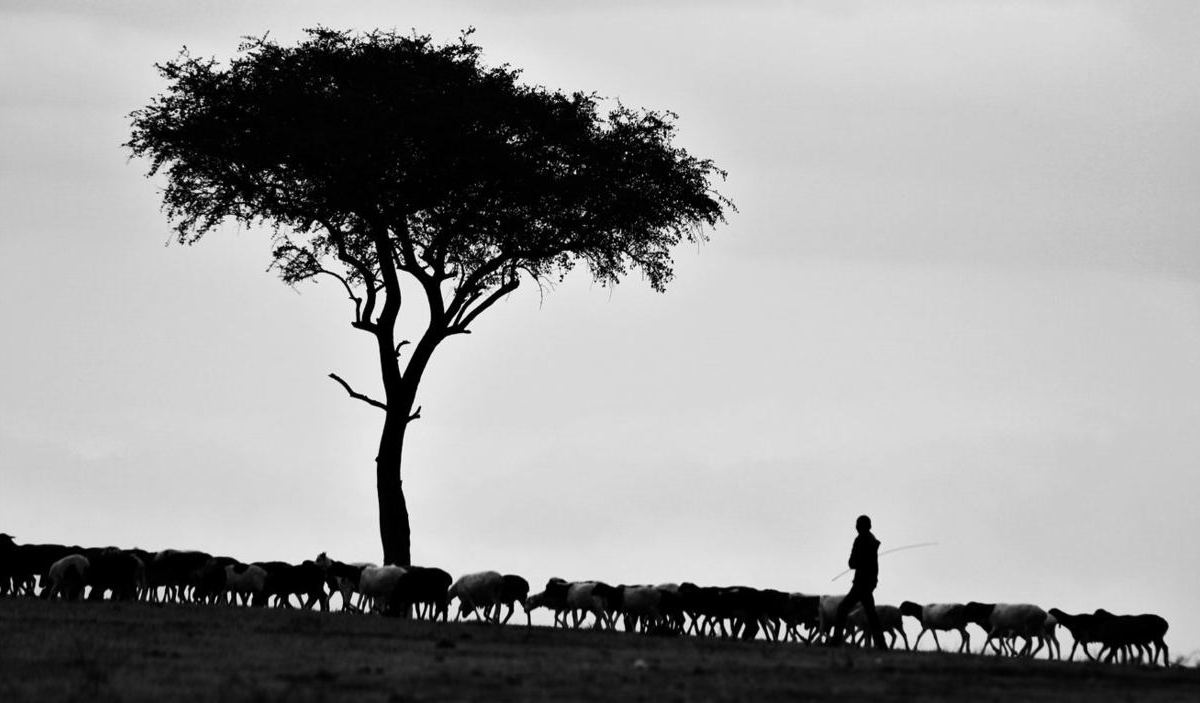
Here is a story, Peter and the wolf. It is about a shepherd who, just for fun, cried for help. The wolf is coming! People in town would go for help and when they realized it was  a joke, would get very upset. The shepherd did it again, just for fun. Once again, the village’s people would go for help. And, again they would realise it wasn’t true.

This went on for a while. After some time, the shepherd saw the wolf approaching and he cried for help once more, this time it was true: Help! The wolf is coming! The villagers, having learnt the lies of the shepherd, turned a deaf ear this time. And what happened? The shepherd saw how the wolf leaped on his sheep while he tried to ask for help one more time.

Turning into urgent what is not ends up on disbelief. How will you be able to differentiate the urgent and important from what is not? How do you recognize that is not a false call, that the wolf is truely here?

We should be more careful when calling URGENT!!!


The shiny object

Magpies are known for their «thievery», collecting shiny objects to adorn their nests. That fact is not 100% true. The reality is that they are inquisitive, interested in any object but show no preference for shininess. (BBC Article).

How many times have you seen someone going after a project, information, topic, … just because it’s bright? Once collected, once they put their nest’s name on it, they just forget about it and go to find the next one? They transmit a false sense of urgency just to get the team to work and to obtain wow! results. Also, they have a false sense of property, if it glitters it has to be theirs.

How may people do you know like the real bird, who are inquisitive? Who want to understand, investigate, keep and share knowledge? Sense of urgency when needed, a team working towards a common goal, results to be trusted. No sense of individual property, just the need to know more. The name onto something would be a reward.

When we behave as the expected magpie, there is no us, no team, 1+1<2. Only me, I, no one else… noise, fights, agitation and anger. There is always someone faster than you. There is the fear of not being able to collect any more shiny objects.

I am not buying it, I prefer the real magpie. That allows the us, 1+1>2. But this, requires patience, generosity and time. There is less fear to failure, there is more place for success.

Maybe it’s been a weird mix of birds and human behavior but I have seen a few with too many useless bright objects in their nest.

New times for construction kits

Imagine a construction kit of 100 pieces, 1 set of instructions for 5 predefined figures and one single player, yourself. Pretty sure that mostly all of us has had one of this during his life. If you think about it, I am sure you find different behaviors when you observe kids nowadays sharing this toy.

There could be that kind of kid that played alone many times, followed the instructions that came with the toy and and perfectioned the figures to build.  But also, there is that one that didn’t even look at the instructions and just started building.

What happens when we add another player? A younger brother, a neighbour, another friend? Will they still follow the paper piece, will the owner of the game tell the others what to build next and how? Or will they just add more imagination to the game and assemble something different and amazing? Will they decide at the beginning what to build and discuss from time to time, what would happen if they did it that way? Giving the best of each?

When they will grow up, they’ll find a world constantly changing (faster than before), where usually the construction pieces do not come with instructions. And, they will have to get together with other kids who had their own toys and friends.

What do you want them to decide? Play by themselves, play with other kids (expanding their horizons)?

Will you wnat them to follow the instructions, always, as you did? Or will you want themto think out of the box and create something cool?

Will you want them to follow the owner’ orders (well, instructions) or will you prefer to see that each kid gives his best? That there is a debate of how to reach the common goal set before the game started?

The rules have changed, and in this case, what applies to kids applies to us. If you were the one who played alone, gave the orders or follow the instructions, it will be kind of difficult to change and adapt. To take risks. There are new «no rules». Adapt or …. live in the «always have been like that».

Teaching vs. doing

Kids are constantly learning new stuff. For example, to tie their shoelaces. We don’t always have the time or the patience to show them how to do it. Do we invest (teach)? or do we want inmediate results (do)?

  • We can teach them how to tie their shoelaces (wetrain them) or you can just tie them ourselves every time
  • We can train and then let them try over and over again, learning from experience or we can just do it and never allow them to learn during the process
  • We can educate them in research (while investigating how things work) or we can let them think that only we have the answer
  • We can show them that there is learning from failure or we can tell them that failure is not an option
  • We can enable them to understand the effort tha lies behind every success or we can leave them blind and think that everything in life is easy, that you only need to ask
  • We can help them to walk the road towards thinking by themselves or we can let them come to us every time that difficult questions appear
  • We can support them so they build their own opinion or we can just let them go with what we consider it’s the truth/right thing
  • We can obtain self-reliant/confident kids or we can have kids that will always ask us what to do next

Teaching takes time, requires dedication, patience, support. And, usually, results do not come inmediately, and when they do, they might need some corrections.

Doing has inmediate results, we do not need to correct anything. Simple and fast.

What kind of kids do you want to lead the future?

But is that what we want? Or do we prefer to develop our kids, our teams?