The first word spoken

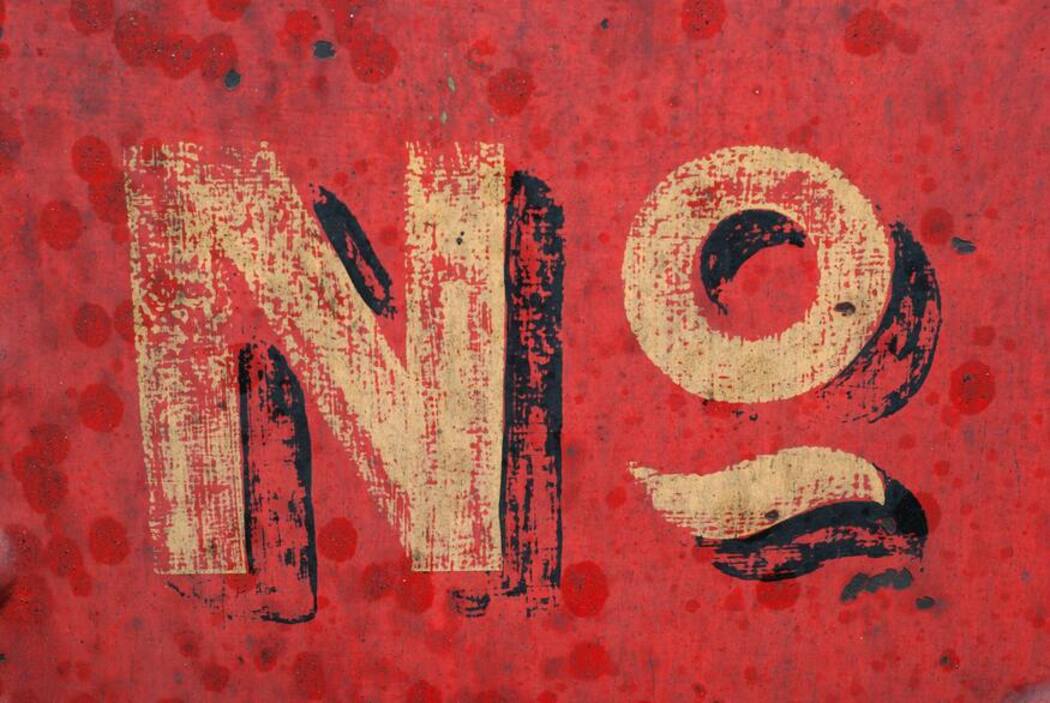
The first word a kid, normally, says is “no”. And it comes from the learning of what can and can not be done, what is ok and what it’s not.

But once we become adults, many keep the “no” as their first answer. Could we try this? No. Would you like to …? No. Is it because we keep the sense that it may incur risks? Or just as simple as they do not want to try something different?

Think, How many “no”s do you say a day?

When we want to achieve behavioral changes, we need to reprogram deep learnings. And how easy is to change something we learned at a so early stage?

Culture and breakfast

The Culture Eats Strategy for Breakfast”. Peter Drucker.

Corporate culture is defined as: “the beliefs and behaviors that determine how a company’s employees and management interact and handle outside business transactions”.

So, in the end, everything comes to people, teams and individuals. Each with its own roadmap, goals, but with a common sharing of beliefs and behaviors. But, together they are who run the business and usual, who face challenges and who will have to execute any strategy that can be designed.

As employee you need to understand your company’s culture. If you are new, in order to fit. If you are already part of the crew, it will help you to understand the way to reach your goals, why you have the feeling there is something not right or make you realized that it is not your place, you don’t fit.

As a company you can have designed the best strategy or requested for the most disruptive solutions, that if the teams have not changed, implementation will be pretty hard to achieve and proposals will not be too original. So, the company has to be aware of what kind of culture is in place.

You want to do different as a company? You need to change the way your staff behaves, or change the staff who behaves in a specific way. If this does not happen majority imposes their own way: Change proposals are always the same with different names, part of the staff is in discomfort.

Changing corporate culture it is not easy, it takes time, willingness, effort and commitment from the management team as they who will lead the transformation.

Thanks for the nice chats with awesome people that reminds me that some things never or change or the only thing that change is the name or label.

We do not have a problem

When you continuously challenge yourself, your environment, how things are done, how does the world work, .. You probably see fixable stuff everywhere.

Organizations are made by people, their knowledge, skills and attitude. The oriented-to-change or to improvement organizations&teams are always looking around, searching for things to be fixed, anything that can be improved by doing differently. Processed that are obsolete and needs to be adapted to a new reality or even better, to be created as there is nothing that can cover the gap. They act proactively. They always see an opportunity, a puzzle / problem that can be solved. The usual answer to How are thing going will be: we could do better.

The oriented-to-resolve organizations&teams happen to be on the other side of the room. They look only to fix what’s broken, only taking action when a PROBLEM is on the table. And when it does, when the problem is visible, it’s usually because it has become important, big, visible. It’s the outcome of adding many issues to which we didn’t pay much attention to, they were too small to be considered. The usual answer to How are things going? Will be: we don’t have any problem.

Well, continuous improvement permits us to avoid big problems or difficulties and be ready for the next challenge. And this is mainly a matter of attitude. The tools for changing will come after.

Because, if we don’t have a problem…. we have a problem.

The last one standing

–  You were not the first to finish the exam, neither the first to begin writing.

– While the rest of the students talked about the solution to the exercise and all agreed that the answer was 23, you could only think about that your calculation result had been 1,908.

– You were not the one always with a question for the teacher in class.

– You are not always the one saying something at a meeting.

– You can not agree on everything your boss says.

– While everyone is moving, changing their role, you are the one staying, same job, same place. You are the «last».

– While everyone seems to get a sonorous reward, you seem to have been given the toughest task

– While everyone agrees that A is the right and unique choice you think that B could work

And here we are…

….. You weren’t wrong then (well, not always) when you thought that the different, sinous path looked worthy, you aren’t wrong now (well, not always).

Not being the first, not matching the majority doesn’t mean you are wrong. It’s only a different way of thinking, timing and approach. And, that feeling of solitude (facing the «mass-correct-ion») fades away, sooner or later. When, something happens that tells you: you were right not rushing, believing in your rationale. But, it requires patience.


Network talks: the impact on labor

In the era of the network society job and employment have experienced a huge transformation.

On one hand, we observe a higher level of individualization, terms as skills, engagement, ownership of your career / development have gained importance over the background. Now, it’s the person as a single element who decides and creates its own path. In a dynamic environment you need to make a difference and/or demonstrate your value constantly. More autonomy, more flexibility, a more demanding environment.

But it doesn’t come alone. On the other hand, labour market by means of different types of contracts (Self-employed, temporary, part time, …) has more flexibility to perform any need of «adjustment».

So, if we add both of them and us the mix over the employees, the result will be two different categories where to fit in:

– «Rebrand-able«, equiped with the skill of recycling themselves, to adapt and change steadily to new technologies, tasks, .. capable of continuous learning, to process information, to transform it into something new.

Generic. Uncapable of keeping the path of continuously learning, whose tasks compete with cheap labour or machines. He/she is easily exchangable.


So now, it’s not only about curiosity, it’s about ensuring you are not left out. Always ready, but even more when what surrounds us changes as fast as in a blink of the eye.

Networks are an interesting element to be studied.

Can our soul vanish?

You fell in love with that brand, product, service, project, team.

You would not buy anything else even if it was cheaper, told it was better, ensured to have a shorter answering time, offered a more attractive one, promised to get a salary increase. You would not do it because of that je ne sais quoi, that intangible thing that kept you attached, let’s call it «soul».

Soul is the essence, the why, of a company, of its members, the who, the sum of each individual believe, effort, success and failure.

If we lose sight of what we want, why and how we act, our soul slowly, very slowly starts to vanish, until one day we do not recognize the person looking at us in the mirror.

When companies start looking for a different what, no understandable motives behind, without adapting/revisiting their why or adjusting teams to the new reality, their soul starts softly to disappear.

And one day, you do not know why, but «love» is no longer there. That brand used to be, that product was good, the service is not bad, the project is no longer thrilling and we could use some fresh air on a new team.

We are not the same we used to be years ago, neither do companies. Life is change and evolution. Awareness and consistency are two elements to keep the essence, our soul with us.

«Gazing out the window» effect

There is a funny thing about zoom, skype.. conferences. We usually forget that the same way we are seeing what others are doing, the rest can see what we are doing. It is like we were looking through a window, seeing what is happening but not being watched by anyone one can see what we are doing.  Something similar happens when we are in our cars, but that is another story.

We forget about any protocol, a protocol we would problably keep if we were attending a Video Conference on a big screen instead of staying in front of our laptop screen. We should always keep the basics of protocol, pay attention, behave. Shouldn’t forget that even being in front of our secure laptop, we are being observed.

Lately, I have noticed that in some stores, the assistants are talking among themselves, gossiping, complaining. Completely forgetting they are being watched, ignoring that customers can see them, trying to get their attention. It hasn’t happened once, neither twice.

Should we make sure our employees are aware of the window effect and they try to avoid it?

We need to constantly remind ourselves, that zoom/Skype meetings are like being all in the same room. No work/type while the meeting takes place, no attention to others chat or calls, no hair grooming, or using the camera as a mirror.

Let’s behave.

Networks: the strength of weak ties

After looking at the strong pieces, we will explore the weak ties, how powerful they are, what we need to do in order to have an excellent network.

Definition: invisible bonds that provide people with access to information and resources beyond those available in their own social circles. They provide the bridges where innovation cross boundaries.

Also identifiable as: that people we met at events, in a meeting that gathered together many people with similar interests. We keep in touch.

Relationship between nodes: acquaintances. That’s why their creation and maintainance require time.

Likely to find in them: High level of new information, possibilities or new opportunities.

If we go one step beyond our personal circles and we look at the organizational networks, we will find that if we want to stay in the current status quo we will stay close to our strong ties. They will reinforce our believes, but we won’t have the opportunity to discover what’s new out there, there will be little room for change. Organizations will work under a silos structure. Instead of that, weak ties, helps organizations to spread knowledge as they help in creating cooperation and coordination. They will break down silos.

So, if they are so benefitial, why we don’t use them more? They push ourselves out of our comfort zones. Firstly, because it’s required to meet new people so to start building them. Secondly, they require time but also mind openness to listen and interiorize different ways of doing or thinking. Finally because we have to overcome the convenience of our strong ties in case of urgency.

Now, do you frequently  find yourself complaining about things not changing? How willing are you to meet new people? Are you ready to keep the effort of avoiding our strong ties in case of help? To jump to ask an acquaitance instead of your close friends?


We have been out for a week. This time out was worthy. Battery full for what’s to come.


The shiny object

Magpies are known for their «thievery», collecting shiny objects to adorn their nests. That fact is not 100% true. The reality is that they are inquisitive, interested in any object but show no preference for shininess. (BBC Article).

How many times have you seen someone going after a project, information, topic, … just because it’s bright? Once collected, once they put their nest’s name on it, they just forget about it and go to find the next one? They transmit a false sense of urgency just to get the team to work and to obtain wow! results. Also, they have a false sense of property, if it glitters it has to be theirs.

How may people do you know like the real bird, who are inquisitive? Who want to understand, investigate, keep and share knowledge? Sense of urgency when needed, a team working towards a common goal, results to be trusted. No sense of individual property, just the need to know more. The name onto something would be a reward.

When we behave as the expected magpie, there is no us, no team, 1+1<2. Only me, I, no one else… noise, fights, agitation and anger. There is always someone faster than you. There is the fear of not being able to collect any more shiny objects.

I am not buying it, I prefer the real magpie. That allows the us, 1+1>2. But this, requires patience, generosity and time. There is less fear to failure, there is more place for success.

Maybe it’s been a weird mix of birds and human behavior but I have seen a few with too many useless bright objects in their nest.

New times for construction kits

Imagine a construction kit of 100 pieces, 1 set of instructions for 5 predefined figures and one single player, yourself. Pretty sure that mostly all of us has had one of this during his life. If you think about it, I am sure you find different behaviors when you observe kids nowadays sharing this toy.

There could be that kind of kid that played alone many times, followed the instructions that came with the toy and and perfectioned the figures to build.  But also, there is that one that didn’t even look at the instructions and just started building.

What happens when we add another player? A younger brother, a neighbour, another friend? Will they still follow the paper piece, will the owner of the game tell the others what to build next and how? Or will they just add more imagination to the game and assemble something different and amazing? Will they decide at the beginning what to build and discuss from time to time, what would happen if they did it that way? Giving the best of each?

When they will grow up, they’ll find a world constantly changing (faster than before), where usually the construction pieces do not come with instructions. And, they will have to get together with other kids who had their own toys and friends.

What do you want them to decide? Play by themselves, play with other kids (expanding their horizons)?

Will you wnat them to follow the instructions, always, as you did? Or will you want themto think out of the box and create something cool?

Will you want them to follow the owner’ orders (well, instructions) or will you prefer to see that each kid gives his best? That there is a debate of how to reach the common goal set before the game started?

The rules have changed, and in this case, what applies to kids applies to us. If you were the one who played alone, gave the orders or follow the instructions, it will be kind of difficult to change and adapt. To take risks. There are new «no rules». Adapt or …. live in the «always have been like that».