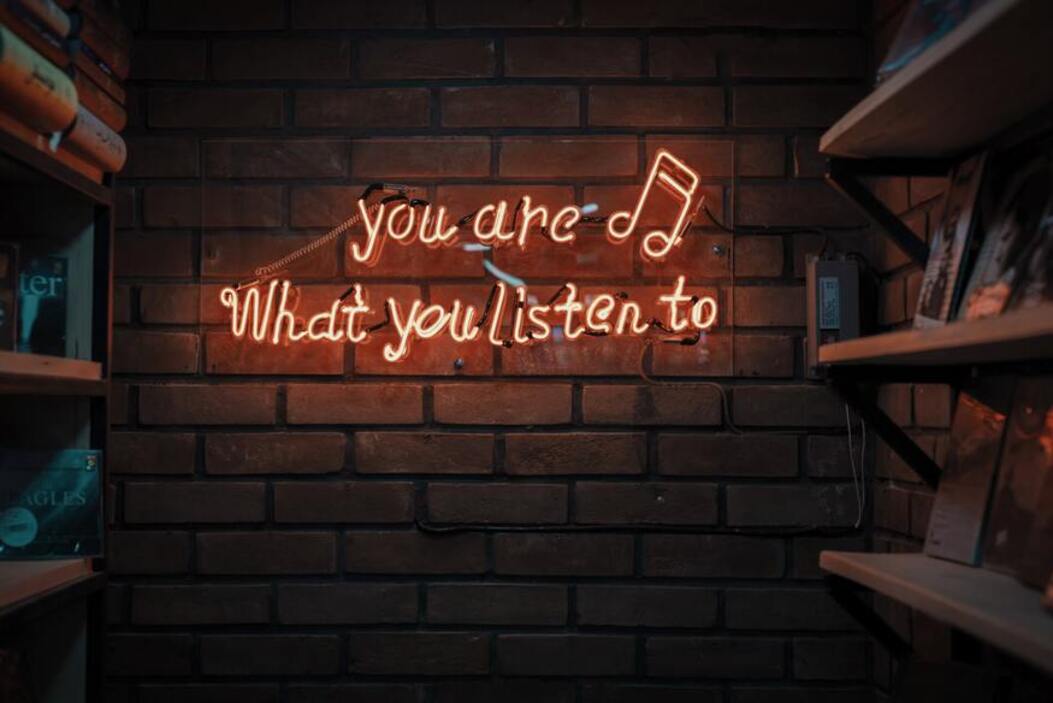
Those cozy spaces of language

Language is a vision of the world, a way of thinking and of organizing real and mental objects.

This is why sometimes we do not have enough words to express how we feel, or to describe reality.

This is why, when we learn a new language we should not try to translate everything into our mother tongue. The one we grow up with, the one, that structures our way of seeing the world. It will never fit.

And last, but not least, this is why there are words, set frases which only have THE meaning in the language in which they were “created“, in which they have a social meaning. We will never find them in our dictionaries or meet their exact translation. They were build to give meaning to a different way of seeing the world.

There is beauty in language, there is beauty in expanding our knowledge by learning unusual words. Every language have their own cozy spaces. Why not go out and enjoy them?

I have some of them, in English, French and Portuguese. Do you have your list already?

Inspiration

Writing helps me in infinite ways, it helps me organize my thoughts, it allows me to see a structure in the unstructured…

And so, where does inspiration comes from? From the world, the people that surrounds me, what I read, see on TV, what bothers me, the questions I have, what I wonder about, what amazes me, what makes me feel that something is wrong, misplaced, that does not fit, … but mostly, mostly from those good, enriching conversations which bring food for thought, what others are asking to themselves and their, mine point of view about it.

Today, this is a bit more difficult, we are far from each other, technology helps us to be, to feel we are a bit more closer, but this is not enough, not for me. Technology helps not to disconnect, helps us to be able to have a chat, to see how we are doing. But still, eye contact, face to face conversations are better, much better. We are social animals, and we need to have human touch. And I miss it even though I am lucky, very lucky.

Inspiration does not come only from words, it comes also from closeness. Hope we can be close again soon. Keep your eyes and ears open! Who knows where inspiration will find you

Short & important

If we prefer sending an email (write and send, easy), if we just forward funny, shocking, easy, stuff that even us (senders) will not be able to remember what were they about two days later… why are we surprise when noise surrounds us? when we receive annoying demanding and/or avoidable emails, or fake news, …?

Let’s try doing the other way around, let’s try calling, visiting instead. Let’s use each interaction for building (relationships, useful content, …). Let’s share any appealing, complex, thoughtful content we found instead.

Should work.


Inspiration does not come easily, sometimes a little help is fine. And it can come from unexpected places.


Giving advice, is not that simple

The road to hell is paved with good intentions.

Last week, two different conversations took place, the first around giving advice only when being asked for and with lot of caution, the second… receiving advice without even asking for.

For sure that most of the times when someone is «advising» you is with the best of the intentions, but should it happen?

  • We are sharing thoughts, experiences, decisions. And out of the blue, comes a » I would…», «If I were you I would not…», «are you sure about…».
  • We ask for it, and in return we get a one size fits all, even if we gave all the necessary pieces for a «bespoken» advice, or even if we only gave the few pieces we wanted or we could share. «everyone is», «you should go to… it worked for us/them/…»
  • We hire a specialist, to have a different, unbiased point of view. From someone who already has been through it and can give us the best options. We do not like what we hear, and we ignore it. We just wanted to pay to hear what we thought it was right.
  • We hire generalists, or specialists to tell us what we think is the best or what we want, to justify what we have already decided.

As bad as receiving non requested advice can be the just-to-be-able-to-tell-myself I knew I was right requested one.

Like many other times, trust lays behind a call for help or seeking for a point of view. Any other thing is for free and unnecessary.

By the way, when we ask, we need to be ready to hear something that can not be of our taste.

Information and trust

Information: #data, #fake_news, #gossip, #tweets, #conversations, #corporate_Communication, #memos, #meetings, #stories, #presentations, #useful, #verified, #estimation…

We live in the era of hyper information. We find anything we want or need, even more, more than we want or look for, we have information overload.

Depending on the source it comes from, we credit it or not. But at the same time, it’s because of the type of information that the source provides over time, that it becomes a «reliable source». Trust is earned with a lot of and constant effort, and it’s really easy to be lost.

We are, therefore, in the era in which trust is a highly valued asset as its production is very scarce. Information is valuable, but it has to be handled wisely.

The Untrustworthy path:

  • Misinforming your colleagues can lead to bad decision
  • Keeping information to yourself, can make you shine for one second but…
  • Releasing the required information when used to one’s own benefit…
  • Manipulating reality, information or conversations
  • Taking ownership of another person’s words…
  • Making up what happened, creating fake news

The Trustworthy path:

  • Right information to the right people
  • Unbiased analysis, information
  • The truth (adapted to the audience)
  • Acknowledging the unawareness
  • ….

Building trust, becoming a reliable source is not an easy, nice path to walk. It’s difficult, but moreover when it seems we should know everything or more than others. When information, more available than before is more blurred than ever. Who can we rely on?

Getting the solution before knowing what the problem is

Our background, prejudices, paradigms, … all affect our decisions, or at least the way we see the world. It is black, green or white, but it is what we know it is. When we face a challenge, specially a problem-solving one, we usually let this influence have an important role in the process. And it’s then, when we, even before knowing what the problem is, jump to the conclusions, offer a solution.

There are quite a few possibilities to get it wrong, especially when we are working in a team. We just jump with what WE know that works, and we don`t even listen to the rest. Then, a battle for the right solution starts. It can be quiet, but it starts a tug-of-war. There is no way to get it right.

So when we are forced to agree on the goal/expectation, and then on what is/are the problems we face by not meeting the expectations, when we list and detail them, when we are requested to explain what we really mean, answer all the questions and chose the ones that we feel we should be trying to fix, it’s easier. It’s intricately easier. At first, we are lost in the chaos, we want to have the solution, now, mine, the ONE. Just be patient. Wait. After the chaos, you will see what is or are the real problems you are demanded to solve.

How often do we forget about common sense, respect and active listening? That’s how often we miss the opportunity to find out the right solution.

When we listen, respect others opinion and build on that is when the team feels that what was completed it was a thing of all, not a thing of one.

You don’t need a board to have that, just practice it.


My «excuse» for skipping one week publishing is having my laptop at the «pc hospital»… 😦

Reset Button: Disconnect to reconnect

Anyone who has lived abroad for a long time and has only spoken the local language mixes words when switching to his mother tongue.

At the beginning it happens rarely, but after a while it becomes more and more usual. It’s normal.

As time goes by, our sentences are more «learned language» and «less native». We feel that our grammar, vocabulary is not… accurate. It makes sense, but it’s not 100% what it used to be before we moved. It feels awkwardly situated. The same happens when we move to a different field of expertise, or a new sector. At the beginning we are still attached to our «old» vocabulary, acronyms. But, gradually we adapt to the new ecosystem. The available space is occupied by the latest info and learnings, the old knowledge is storaged (the more time goes by the more we archive these memories in the long term storage). Yeah, it’s there, somewhere in our memory. The link with it are headlines, general ideas.

Whatever reason why we seek to regain old lands it is not an easy thing to do. When we try to retreat any knowledge/vocabulary from the «long term storage facilites of our memory» we seem lost. No backup, lost expertise, gone, blankspace.

The solution is to «press the reset button». Go back to the recovery point, «delete» temporarily what we were coded with. Disconnect to reconnect. Find ourselves again (our old «us»). It can be useful to ask for a little help, there is always someone who knows were to find the hiddest «reset buttons».


The exposure effect

Speakers, «hubbers», central areas, … are exposed to the others’ opinions

Speakers are exposed to others opinions and critics, to their questions. If you are one of those who appreciate feedback to improve, then it can turn into a criticism that you did not ask for, but certainly you can expect.

«Hubbers» or people / teams that receive, transform, share and communicate information are exposed to misunderstandings, can be questionned. They will probably receive feedback even not asking for it. When sharing with others, presenting, they work is questionned, there is always someone who would say it in a different way, with different words. It’s not understandable, simple or clear enough.

Any person who shares (information, knowledge, …) exposes a piece of himself, selflessly. They give a bit of their effort, creativity. Give away a lot, not expecting anything in return. They only ask for «fuel» to fill the gap left, they will usually ask you what do you think? Can I make it different better?

So the exposure effect tells us that the more exposed you are, the more you give yourself to others, the more respect you show when others share with you. Your feedback is constructive, to help them grow.

The less exposed you are, or you allow yourself to be, the easier it is that you can give unnecessary info (I would not say, I would not do). And the less willing to really give a hand.

Networks: the strength of weak ties

After looking at the strong pieces, we will explore the weak ties, how powerful they are, what we need to do in order to have an excellent network.

Definition: invisible bonds that provide people with access to information and resources beyond those available in their own social circles. They provide the bridges where innovation cross boundaries.

Also identifiable as: that people we met at events, in a meeting that gathered together many people with similar interests. We keep in touch.

Relationship between nodes: acquaintances. That’s why their creation and maintainance require time.

Likely to find in them: High level of new information, possibilities or new opportunities.

If we go one step beyond our personal circles and we look at the organizational networks, we will find that if we want to stay in the current status quo we will stay close to our strong ties. They will reinforce our believes, but we won’t have the opportunity to discover what’s new out there, there will be little room for change. Organizations will work under a silos structure. Instead of that, weak ties, helps organizations to spread knowledge as they help in creating cooperation and coordination. They will break down silos.

So, if they are so benefitial, why we don’t use them more? They push ourselves out of our comfort zones. Firstly, because it’s required to meet new people so to start building them. Secondly, they require time but also mind openness to listen and interiorize different ways of doing or thinking. Finally because we have to overcome the convenience of our strong ties in case of urgency.

Now, do you frequently  find yourself complaining about things not changing? How willing are you to meet new people? Are you ready to keep the effort of avoiding our strong ties in case of help? To jump to ask an acquaitance instead of your close friends?


We have been out for a week. This time out was worthy. Battery full for what’s to come.


Rules for successful VCs

There have been many, many writtings about how to run the perfect meeting, be effective, how to run a conference call… but still, same mistakes are made.

Video call in real life (sounds familiar?)*

Planning and organization are important for any kind of meeting, but it is essential when we have remote, multi-type of connections (phone, TP, VC, …), several locations, multi-languages meetings. And there have to be set up some rules.

Rules for a succesful «multi» conference:

PRE

1. Send the info that will be presented / discussed in advance

2. Set a clear agenda, as detailed as possible with timing per participant. Be aware of the language barriers and its possible impact on the dedicated time per topic

3. Make sure every that each attendant is aware of what is expected from him and what should they expect to get away with after the meeting

4. Decide «the meeting’ ruler». Not mandatory to be the host, but it helps

5. Check that all those who will have to talk, or to decide about something are aware of and ready for it

6. Try as much as possible, to limit the participation to those strictly needed. Extra people (just to be there) are not invited. Keep the party under control, the less the better

6. Include in the invite where to find the material

7. If you know in advance that an important participant will not be able to attend, update the rest and let them know what impact will this have on the meeting’s development

BEGINNING…

1. Remind the rules for the game (silenced microphones, raised hand button usage, time limits, when are the Q&A allowed, who will be sending the minutes…)

2. If someone important is missing, apologize and move on. Don’t let the others think they should wait for him

IN THE COURSE…

1. Be strict. Told them to be on mute when not speaking but there is noise on the background? Mute them all. Someone is consuming more time than allowed? Next topic. Pre-work was not done? …

2. If you are the one taking notes, ask if there is something important you think you are missing

3. Stop for the important pieces (e.g. decision making points), make sure everyone was paying attention and understood correctly

4. Stick to the agenda

Having more items on the pre-session list shows us that there is no place for improvisation.  To run a successful meeting means a lot of effort and time (from everyone). So, why do we still have so many? With so little preparation?  Let’s change that!!!

* Hilarious, real life conf call by Tripp and Tyler