Our choice of words

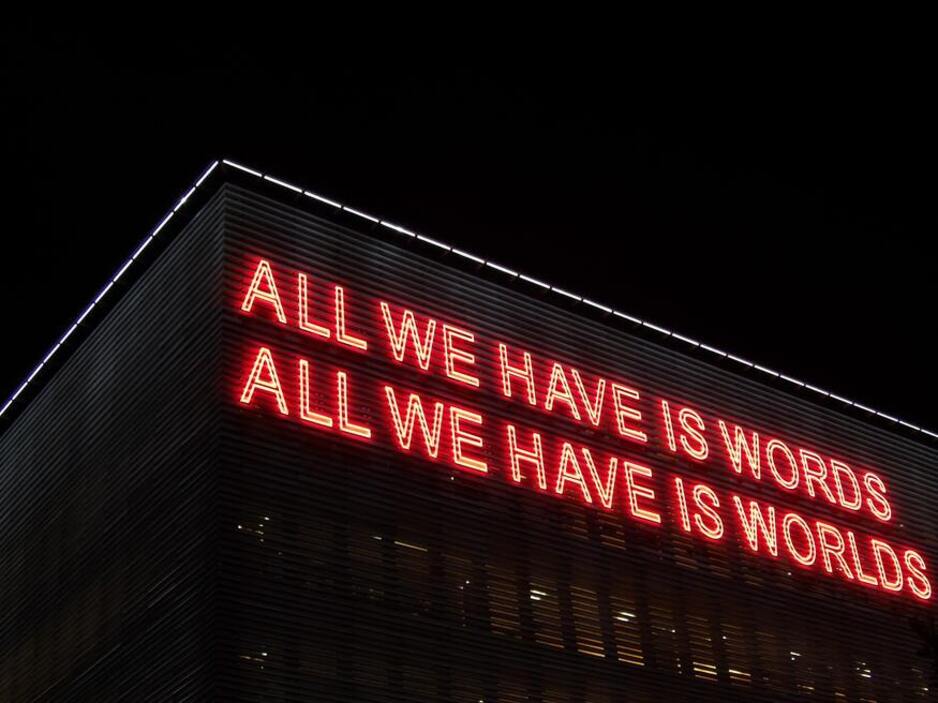
Language is the main vehicle for communication. It’s how we learn at the earliest stage of our life how the worlds looks like and works. It is part of what defines us, who we are or who we want to become.

So, the words we choose, the way we express ourselves, say a lot about us, how do we want to relate with other people. It is a tool and a modeling clay. You decide how to see the world and how to be seen.

What do you mean? = I don’t see what you are doing or I am not able to see it it the same way

I agree = we both see it the same way

I disagree = I have a different approach, a different look

….

So, our choice of words are quite a thing!

Those cozy spaces of language

Language is a vision of the world, a way of thinking and of organizing real and mental objects.

This is why sometimes we do not have enough words to express how we feel, or to describe reality.

This is why, when we learn a new language we should not try to translate everything into our mother tongue. The one we grow up with, the one, that structures our way of seeing the world. It will never fit.

And last, but not least, this is why there are words, set frases which only have THE meaning in the language in which they were “created“, in which they have a social meaning. We will never find them in our dictionaries or meet their exact translation. They were build to give meaning to a different way of seeing the world.

There is beauty in language, there is beauty in expanding our knowledge by learning unusual words. Every language have their own cozy spaces. Why not go out and enjoy them?

I have some of them, in English, French and Portuguese. Do you have your list already?

Reset Button: Disconnect to reconnect

Anyone who has lived abroad for a long time and has only spoken the local language mixes words when switching to his mother tongue.

At the beginning it happens rarely, but after a while it becomes more and more usual. It’s normal.

As time goes by, our sentences are more «learned language» and «less native». We feel that our grammar, vocabulary is not… accurate. It makes sense, but it’s not 100% what it used to be before we moved. It feels awkwardly situated. The same happens when we move to a different field of expertise, or a new sector. At the beginning we are still attached to our «old» vocabulary, acronyms. But, gradually we adapt to the new ecosystem. The available space is occupied by the latest info and learnings, the old knowledge is storaged (the more time goes by the more we archive these memories in the long term storage). Yeah, it’s there, somewhere in our memory. The link with it are headlines, general ideas.

Whatever reason why we seek to regain old lands it is not an easy thing to do. When we try to retreat any knowledge/vocabulary from the «long term storage facilites of our memory» we seem lost. No backup, lost expertise, gone, blankspace.

The solution is to «press the reset button». Go back to the recovery point, «delete» temporarily what we were coded with. Disconnect to reconnect. Find ourselves again (our old «us»). It can be useful to ask for a little help, there is always someone who knows were to find the hiddest «reset buttons».


The transformer power of language. Use it for the best version of you.

Your future you

Language helps us to express feelings, desires, expectations, … so many things as we have been reading. The way we use verb tenses conditions a lot how do we face challenges in life. It also exposes our attitude towards difficulties and changes (do we let it just happen? do we act? do we have fear?).


I should…: You are aware that something needs to be done, action taken,… but you are postponing the action.

I want to… : Implies desire, the initiative to start a change, to become something different.

I will…: Shows a clear intention. It implies that we have defined a target.

I have planned to: You already have something in mind, there is plan and an execution on its way.

I am -ing…: Already on the move, towards a final destination.

When the time to look back finally arrives, you should say, I made it: You walked all the way and you succeed. You arrived after all the efforts and sacrifices.

And you should not have to say, I should have…: You regret a decision or a non-decision making. At some point, there was something you didn’t risk trying. This should not happen.Time flies.

Any decision you make needs to be thoughtful. When you are in doubt, choosing between two roads you will discuss a lot with yourself. Eventually you will go for one and you will get, learn, earn some things yet leaving other things.

You can not spend your life stuck, complaining, letting things happening around you, to you, and doing nothing (I should, I could…).  In the end, by allowing yourself to be unhappy an bored days may seem to pass really slow but it is the other way around. Move, try, progress (start using I will, I am…).

If you are on the I should, I would… move to I want to, I will, I am. Transform your language, transform your attitude.