
The last one standing

–  You were not the first to finish the exam, neither the first to begin writing.

– While the rest of the students talked about the solution to the exercise and all agreed that the answer was 23, you could only think about that your calculation result had been 1,908.

– You were not the one always with a question for the teacher in class.

– You are not always the one saying something at a meeting.

– You can not agree on everything your boss says.

– While everyone is moving, changing their role, you are the one staying, same job, same place. You are the «last».

– While everyone seems to get a sonorous reward, you seem to have been given the toughest task

– While everyone agrees that A is the right and unique choice you think that B could work

And here we are…

….. You weren’t wrong then (well, not always) when you thought that the different, sinous path looked worthy, you aren’t wrong now (well, not always).

Not being the first, not matching the majority doesn’t mean you are wrong. It’s only a different way of thinking, timing and approach. And, that feeling of solitude (facing the «mass-correct-ion») fades away, sooner or later. When, something happens that tells you: you were right not rushing, believing in your rationale. But, it requires patience.

 

Ideas and facts

When we are spending times with friends, we can spend hours discussing about almost any topic. It is not mandatory to have data, only respectful arguments that can support our opinion. The opinion can be based on your personal experience or in someone elses that you try.

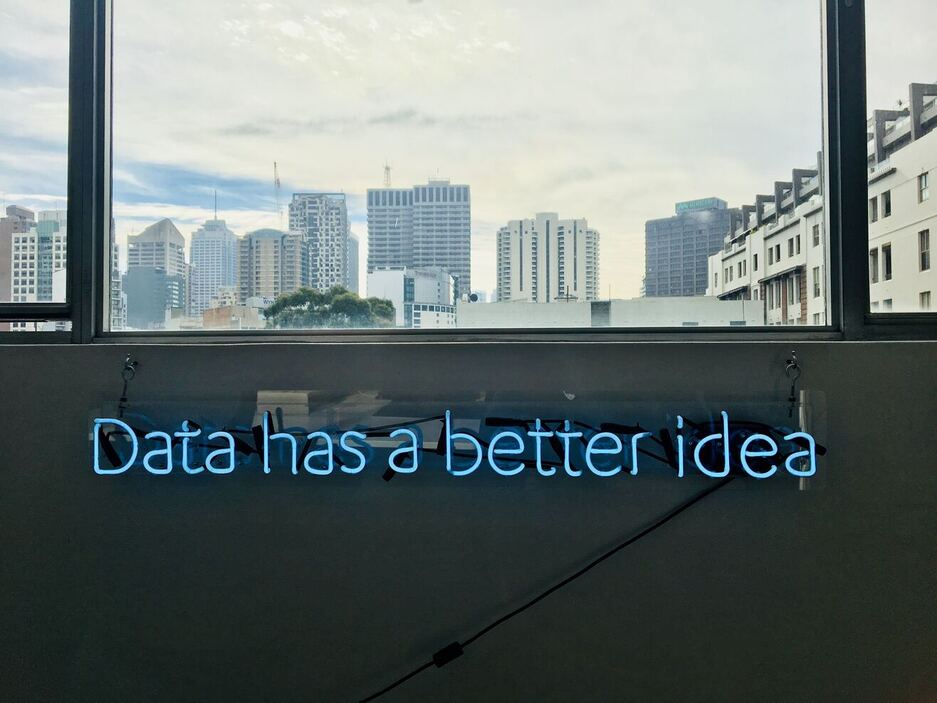
But when you try to change things, when at work you want someone’s help, it is not enough with a belief, a feeling, an idea. You need to bring facts. As many as you can. This is not working, this can be done in a better/Different way, here I have the data to support my words. We need to do this change, we need to have this tool. This are the data we have to support our statements. Or, if we had the data we would be able to act over this different issues, but we are not able to obtain the data, that is why we need to build a reporting tool.

The difference between an opinion/idea and a fact is data. It will help you to sustain your requests, your arguments and get the help you need (or at least try to) or prove yourself you were wrong when you first brought to the table that idea that felt soooo real.

Data can be useful, it can bring light to foogy zones.

Network talks: the impact on labor

In the era of the network society job and employment have experienced a huge transformation.

On one hand, we observe a higher level of individualization, terms as skills, engagement, ownership of your career / development have gained importance over the background. Now, it’s the person as a single element who decides and creates its own path. In a dynamic environment you need to make a difference and/or demonstrate your value constantly. More autonomy, more flexibility, a more demanding environment.

But it doesn’t come alone. On the other hand, labour market by means of different types of contracts (Self-employed, temporary, part time, …) has more flexibility to perform any need of «adjustment».

So, if we add both of them and us the mix over the employees, the result will be two different categories where to fit in:

– «Rebrand-able«, equiped with the skill of recycling themselves, to adapt and change steadily to new technologies, tasks, .. capable of continuous learning, to process information, to transform it into something new.

Generic. Uncapable of keeping the path of continuously learning, whose tasks compete with cheap labour or machines. He/she is easily exchangable.


So now, it’s not only about curiosity, it’s about ensuring you are not left out. Always ready, but even more when what surrounds us changes as fast as in a blink of the eye.

Networks are an interesting element to be studied.

Network Talks: Collaboration, how?

Easy to say, not so easy to do. Open space, team building, training, … All of this worths nothing, as they are simply tools, if there is not in place the basic, the HOW. And that’s Trust.

What you need:

Trust is the only feasible base to build a collaborative environment as it makes every interaction go farther than the only desire to obtain an occasional benefit. It brings the magic of being able to get quick wins but also, think about the long term and each participants best contribution.

How to start?

You want to collaborate? you need some kind of bond with the others. You will have to build a relationship of trust with those that will help the team to grow. It will be then when egos will not exist, it will be possible to listen to and agree with different thinkings, when you will be able to accept that the benefit of the team can be greater than your individual.

Keeping the motion:

Obviously, it is not possible to have all the members with the same level of implication. There have been identified three different groups. The first is that 1% of the team members called the core. They share, push, coordinate, always with a yes for a new adventure or with a special look at things. The second, 9% of team members called, actives. They participate when they are interested in the topic, work hard, share and learn. But, the other 90% is passive. They don’t push, they do not actively participate. They observe and listen.

Life cycle:

The collaborative network is capable of self-regulation. Meaning, if a node of the network is not adding, stops being useful for the final purpose, it blocks its progress, the same network as the base is no longer present, smoothly makes it disappear. And keeps the work with those that want and can.


Once you start, it can only get bigger.

Clueless? Don’t panic

When a problem arises, there are two different type of responses. One is to try finding the answer on what we know or did in the past that apparently worked. The other is to seek for out of the box solutions.

But sometimes happens that the challenge/problem was never approached. Or, at least, there are no close references to look for. Then, we tend to panic. And we can do two things here, face it and do (move) or just stay behind and see what’s done. Those who conform the first group are usually scared, putting on themselves too much responsibility. «No one showed up, but it had to be done. Will I be doing the right thing? Is this the most adequate path?» They are immersed in a continuous sense of being clueless.  Will the rest of the team notice that I am not certain about doing the right thing?

Too many questions, too much pressure on yourself. But don’t be so hard on yourself. Because, guess what? The rest is as clueless as you are. But at least you took a step forward.

Giving advice, is not that simple

The road to hell is paved with good intentions.

Last week, two different conversations took place, the first around giving advice only when being asked for and with lot of caution, the second… receiving advice without even asking for.

For sure that most of the times when someone is «advising» you is with the best of the intentions, but should it happen?

  • We are sharing thoughts, experiences, decisions. And out of the blue, comes a » I would…», «If I were you I would not…», «are you sure about…».
  • We ask for it, and in return we get a one size fits all, even if we gave all the necessary pieces for a «bespoken» advice, or even if we only gave the few pieces we wanted or we could share. «everyone is», «you should go to… it worked for us/them/…»
  • We hire a specialist, to have a different, unbiased point of view. From someone who already has been through it and can give us the best options. We do not like what we hear, and we ignore it. We just wanted to pay to hear what we thought it was right.
  • We hire generalists, or specialists to tell us what we think is the best or what we want, to justify what we have already decided.

As bad as receiving non requested advice can be the just-to-be-able-to-tell-myself I knew I was right requested one.

Like many other times, trust lays behind a call for help or seeking for a point of view. Any other thing is for free and unnecessary.

By the way, when we ask, we need to be ready to hear something that can not be of our taste.

A new playlist: bottling pieces of life

Spotify is one of those magic apps that allow you to «bottle» thousands of songs, and label them so they can be easy to identify when ready for consumption.

My reason for creating new ones is mainly getting tired of listening to the same songs (use almost the same type of music regardless of the activity I am doing: Sport, waitings, isolating from noise..). So, you can find quite interesting mix of songs in these playlists, as they can bring many different memories or just be a cool song your friend recommended. Anyway…  a present for you (and why I have listed them!):


Yes, this could be my next (varied) playlist. It’s only missing the label. Summer recap could work.

Enjoy friends, family and life. Don’t take things too serious. Build your own works for «almost» any occasion playlist. It cheers you up.

«Gazing out the window» effect

There is a funny thing about zoom, skype.. conferences. We usually forget that the same way we are seeing what others are doing, the rest can see what we are doing. It is like we were looking through a window, seeing what is happening but not being watched by anyone one can see what we are doing.  Something similar happens when we are in our cars, but that is another story.

We forget about any protocol, a protocol we would problably keep if we were attending a Video Conference on a big screen instead of staying in front of our laptop screen. We should always keep the basics of protocol, pay attention, behave. Shouldn’t forget that even being in front of our secure laptop, we are being observed.

Lately, I have noticed that in some stores, the assistants are talking among themselves, gossiping, complaining. Completely forgetting they are being watched, ignoring that customers can see them, trying to get their attention. It hasn’t happened once, neither twice.

Should we make sure our employees are aware of the window effect and they try to avoid it?

We need to constantly remind ourselves, that zoom/Skype meetings are like being all in the same room. No work/type while the meeting takes place, no attention to others chat or calls, no hair grooming, or using the camera as a mirror.

Let’s behave.

Changing our habits

Habit: usual way of behaving or a tendency that someone has settled into.

Some examples:

  • eating the first thing you find in the fridge when you get home or going to bed without eating at all
  • minimize the quality of the work done, or apologize for the next comment you will make or not even arise the work done
  • understate your own success
  • looking for other’s approval

You probably realize that this is not an effective way to lose some weight, get in shape, give a talk, have a constructive discussion or be recognize as a relevant member.

Sometimes, awareness comes from an impacting event. But, most of the times, it is because we are reminded after repeating one of these behaviors. And it comes from someone who is able to see us and who cares. First step to change our habits is being aware of when we are doing it (and a friendly reminder is always of help). The more aware we are, the more progress we can have (more possibilities to correct the course).

Pretty simple formula here: Changing habits= Awareness x Intention x Effort.

First step of moving away from the place you are is becoming aware of where you are.

Urgency overuse can make it meaningless

How many times do you hear: «this is urgent»… «X» has asked for this report asap, we need the information by the end of the morning, I am sorry to come on a rush but we are on a hurry and we need your help Now, … many many times.

No one can live forever inmersed in a sense of urgency, always asked to give a bit more and faster. No one.

We work hard, we can run the extra mile, we will strive when it’s necessary, because the moment, the project, the circumstances demand it. But, that can last forever. That’s on the giver side, but what about the petitioner? Do you know anyone who has always something really urgent to be done? Who, when asking for help, ends the sentence with a but we need for Now…

Here is a story, Peter and the wolf. It is about a shepherd who, just for fun, cried for help. The wolf is coming! People in town would go for help and when they realized it was  a joke, would get very upset. The shepherd did it again, just for fun. Once again, the village’s people would go for help. And, again they would realise it wasn’t true.

This went on for a while. After some time, the shepherd saw the wolf approaching and he cried for help once more, this time it was true: Help! The wolf is coming! The villagers, having learnt the lies of the shepherd, turned a deaf ear this time. And what happened? The shepherd saw how the wolf leaped on his sheep while he tried to ask for help one more time.

Turning into urgent what is not ends up on disbelief. How will you be able to differentiate the urgent and important from what is not? How do you recognize that is not a false call, that the wolf is truely here?

We should be more careful when calling URGENT!!!