Happy thanksgiving (+1)!

Yesterday was thanksgiving. A day to give thanks (although we should be able to do it every day, not having to wait a whole year!) to:

those who love and support us

those who teach us something every day, making who we are

for what we have, how lucky we can be

to who gives a break when we need it most

those who give us the opportunity to admire beauty (in art, in words…)

those who do not need words to understand

those who give us the opportunity to be better

….

Well,  didn’t do it yesterday? You have all the time in the world. Start today, be thankful.


From me to all of you. Thank you

Focus on … what?

We only think about leaning our daily activity when struggling, we put the effort on being cost effective when facing budget cuts, we talk about being customer oriented when we are losing them…

But what if we tried to always do better, for ourselves, our customers and employees at the most reasonable cost? Common sense. Put that together with a clear business vision and magic will happen.

Invest all the energy in meaningful things, not because bad times have catched you.

Network Talks: Collaboration, how?

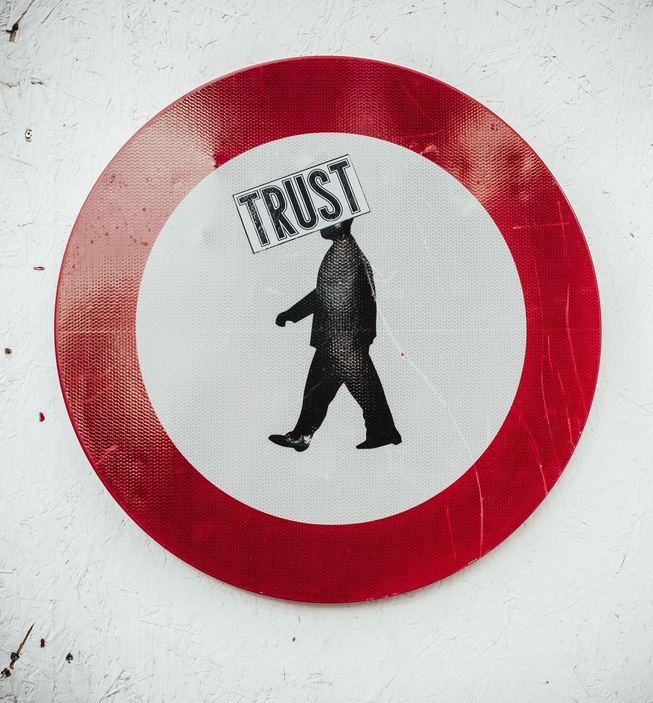
Easy to say, not so easy to do. Open space, team building, training, … All of this worths nothing, as they are simply tools, if there is not in place the basic, the HOW. And that’s Trust.

What you need:

Trust is the only feasible base to build a collaborative environment as it makes every interaction go farther than the only desire to obtain an occasional benefit. It brings the magic of being able to get quick wins but also, think about the long term and each participants best contribution.

How to start?

You want to collaborate? you need some kind of bond with the others. You will have to build a relationship of trust with those that will help the team to grow. It will be then when egos will not exist, it will be possible to listen to and agree with different thinkings, when you will be able to accept that the benefit of the team can be greater than your individual.

Keeping the motion:

Obviously, it is not possible to have all the members with the same level of implication. There have been identified three different groups. The first is that 1% of the team members called the core. They share, push, coordinate, always with a yes for a new adventure or with a special look at things. The second, 9% of team members called, actives. They participate when they are interested in the topic, work hard, share and learn. But, the other 90% is passive. They don’t push, they do not actively participate. They observe and listen.

Life cycle:

The collaborative network is capable of self-regulation. Meaning, if a node of the network is not adding, stops being useful for the final purpose, it blocks its progress, the same network as the base is no longer present, smoothly makes it disappear. And keeps the work with those that want and can.


Once you start, it can only get bigger.

Clueless? Don’t panic

When a problem arises, there are two different type of responses. One is to try finding the answer on what we know or did in the past that apparently worked. The other is to seek for out of the box solutions.

But sometimes happens that the challenge/problem was never approached. Or, at least, there are no close references to look for. Then, we tend to panic. And we can do two things here, face it and do (move) or just stay behind and see what’s done. Those who conform the first group are usually scared, putting on themselves too much responsibility. «No one showed up, but it had to be done. Will I be doing the right thing? Is this the most adequate path?» They are immersed in a continuous sense of being clueless.  Will the rest of the team notice that I am not certain about doing the right thing?

Too many questions, too much pressure on yourself. But don’t be so hard on yourself. Because, guess what? The rest is as clueless as you are. But at least you took a step forward.

Time for a break

We work hard, we live under a lot of pressure, our agenda is full, our weekends or days-off are few, short.

The closest you get to that expected break, the more you feel the tiredness, but at the same time you have that joy of having that amount of time to do whatever you want or nothing at all. Is like being on a run, the last meters are ther best and the worst, so close to the end, so tired that you would like to stop.

Breaks allow us to recharge our batteries, rethink our position, prepare for the next step. During that time we can study, read, go out, do nothing at all, … anything is possible if it helps to its purpose.

To those who are already on a break, enjoy. Those who are not but it is close, just think it is closer than it was yesterday.

Road to improvement will be back in September, full charged.


Can our soul vanish?

You fell in love with that brand, product, service, project, team.

You would not buy anything else even if it was cheaper, told it was better, ensured to have a shorter answering time, offered a more attractive one, promised to get a salary increase. You would not do it because of that je ne sais quoi, that intangible thing that kept you attached, let’s call it «soul».

Soul is the essence, the why, of a company, of its members, the who, the sum of each individual believe, effort, success and failure.

If we lose sight of what we want, why and how we act, our soul slowly, very slowly starts to vanish, until one day we do not recognize the person looking at us in the mirror.

When companies start looking for a different what, no understandable motives behind, without adapting/revisiting their why or adjusting teams to the new reality, their soul starts softly to disappear.

And one day, you do not know why, but «love» is no longer there. That brand used to be, that product was good, the service is not bad, the project is no longer thrilling and we could use some fresh air on a new team.

We are not the same we used to be years ago, neither do companies. Life is change and evolution. Awareness and consistency are two elements to keep the essence, our soul with us.

Urgency overuse can make it meaningless

How many times do you hear: «this is urgent»… «X» has asked for this report asap, we need the information by the end of the morning, I am sorry to come on a rush but we are on a hurry and we need your help Now, … many many times.

No one can live forever inmersed in a sense of urgency, always asked to give a bit more and faster. No one.

We work hard, we can run the extra mile, we will strive when it’s necessary, because the moment, the project, the circumstances demand it. But, that can last forever. That’s on the giver side, but what about the petitioner? Do you know anyone who has always something really urgent to be done? Who, when asking for help, ends the sentence with a but we need for Now…

Here is a story, Peter and the wolf. It is about a shepherd who, just for fun, cried for help. The wolf is coming! People in town would go for help and when they realized it was  a joke, would get very upset. The shepherd did it again, just for fun. Once again, the village’s people would go for help. And, again they would realise it wasn’t true.

This went on for a while. After some time, the shepherd saw the wolf approaching and he cried for help once more, this time it was true: Help! The wolf is coming! The villagers, having learnt the lies of the shepherd, turned a deaf ear this time. And what happened? The shepherd saw how the wolf leaped on his sheep while he tried to ask for help one more time.

Turning into urgent what is not ends up on disbelief. How will you be able to differentiate the urgent and important from what is not? How do you recognize that is not a false call, that the wolf is truely here?

We should be more careful when calling URGENT!!!

 

Information and trust

Information: #data, #fake_news, #gossip, #tweets, #conversations, #corporate_Communication, #memos, #meetings, #stories, #presentations, #useful, #verified, #estimation…

We live in the era of hyper information. We find anything we want or need, even more, more than we want or look for, we have information overload.

Depending on the source it comes from, we credit it or not. But at the same time, it’s because of the type of information that the source provides over time, that it becomes a «reliable source». Trust is earned with a lot of and constant effort, and it’s really easy to be lost.

We are, therefore, in the era in which trust is a highly valued asset as its production is very scarce. Information is valuable, but it has to be handled wisely.

The Untrustworthy path:

  • Misinforming your colleagues can lead to bad decision
  • Keeping information to yourself, can make you shine for one second but…
  • Releasing the required information when used to one’s own benefit…
  • Manipulating reality, information or conversations
  • Taking ownership of another person’s words…
  • Making up what happened, creating fake news

The Trustworthy path:

  • Right information to the right people
  • Unbiased analysis, information
  • The truth (adapted to the audience)
  • Acknowledging the unawareness
  • ….

Building trust, becoming a reliable source is not an easy, nice path to walk. It’s difficult, but moreover when it seems we should know everything or more than others. When information, more available than before is more blurred than ever. Who can we rely on?

Push & Pull Customer Service

Customer experience, Customer journey, customer service, customer centric, our customer is the reason of everything we do. How many of these words have you heard lately? Many of them, for sure.

There are many ways to interact with customers: tolerate them, handle them nicely, care about them, overwhelm them, ignore them…

I have experienced two examples this week:

Company A was supposed to show up at 6 pm to install a router. Called at 2pm saying we are close to your place can we do the service now? No, second call, no second arrangement. We called to see what had happened, then a new appointment was made. Service, after that, perfect. PULL SERVICE.

Company B, to whom we had bought 2 months ago (fresh fruits). I received a text saying, guess what? we will be close to your place tomorrow. So, if you need anyhting, you forgot to buy whatever it was we will deliver it to you for free. Only if you place your order before 11pm. PUSH SERVICE.

PULL SERVICE: doesn’t have to be bad. But you need to call, you need to track down, it’s you who needs it and who will have to look after it. They pull from their customers.

PUSH SERVICE: Doesn’t have to be good. But, guess what? happens to be that we will be close to your home, do you need anything?

What service does your company have? Push or pull? And when you face YOUR Customer how does he/she feel treated?


The scarce good of Speaking up

Not everyone does it, speaking up is a scarce good.

And when we do, when we speak up, it’s not guaranteed we do it at the right time, with the appropriate words, with an elaborated statement, ..

So, there is no good in remaining silent, even more when we see something unfair, an injustice or something that is simply wrong. But we need to find the time and the words.

Just speaking up will probably make us feel better, but it will be only for a small space of time. Consecuences can be terrible, we might regret what was said, because HOW we said it does fit in with our way  of being.

Speaking up is necessary, mostly when silence is ruling the world. Just, listen to good advices, think, order your thoughts and speak. You will not regret doing so.